FRP Sheets Offer Superior Impact Resistance Compared To Standard PVC And Will Not Rust Or Corrode Like Untreated Metal. They Provide Excellent Natural Daylighting, Which Metal Sheets Cannot, And Are Generally More Durable And Weather-Resistant Than Many Plastic Alternatives For Heavy-Duty Industrial Roofing.
x
C
A
H
Welcome to Classic Acrylic House - Quality Acrylic Sheets & Films
We're Open: Sat - Thu 8:00 - 18:00

- Call Us for Orders!
- +91 95458 78652
- Visit Our Store
- Bhawani Peth, Pune - 411042
- Email Us
- info@classicacrylichouse.com

FRP Fibre Sheets
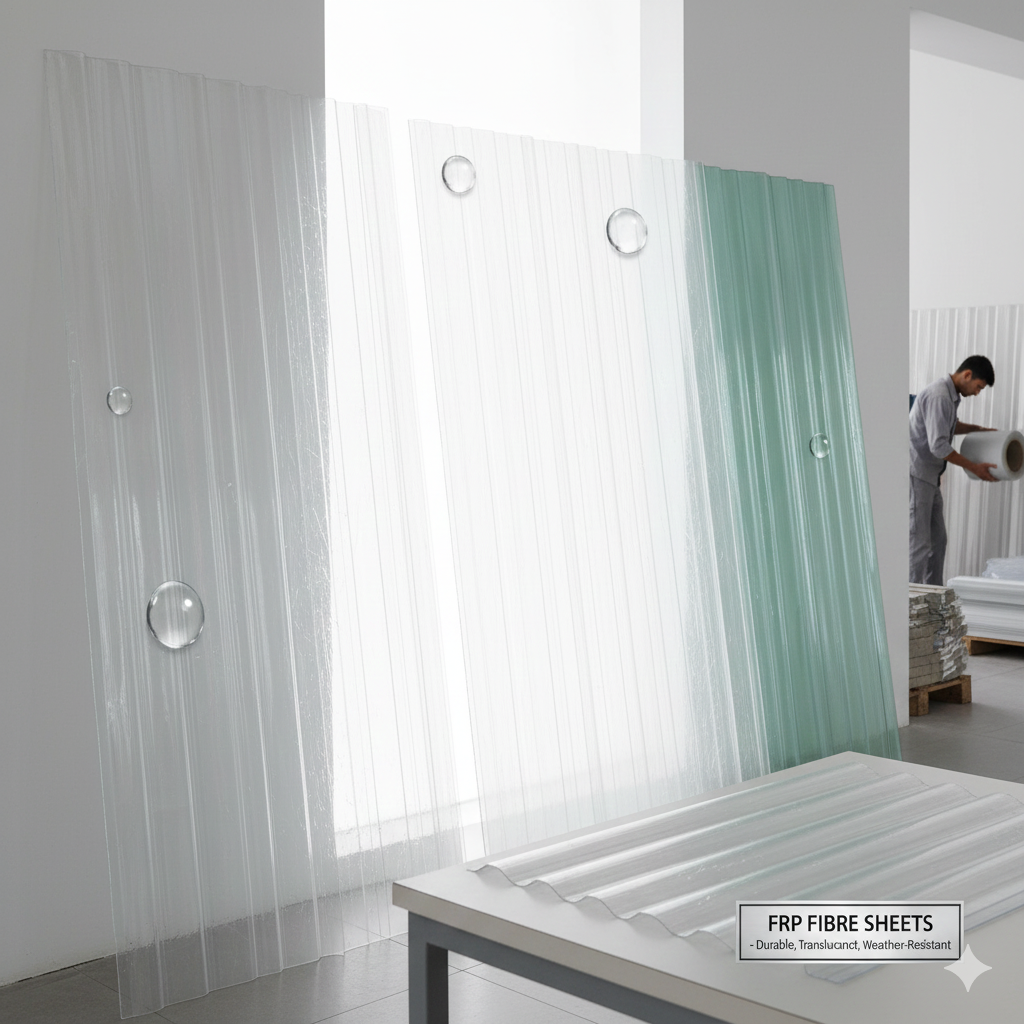
FRP Fibre Sheets - Durable, Corrugated Roofing & Cladding
High Strength | Light Transmitting
FRP (Fibre Reinforced Plastic) Sheets Are A Composite Material Made Of Fibreglass Reinforcement Embedded In A Polymer Resin (Usually Polyester). Known For Their Exceptional Strength, Chemical Resistance, And Weatherproofing Qualities, They Are Primarily Used In Industrial And Agricultural Roofing And Side Cladding.
Available In Both Opaque And Translucent/Transparent Variants, FRP Sheets Provide A Durable, Rust-Free, And Cost-Effective Solution For Natural Daylighting (Skylights) Or Complete Opaque Covering For Workshops, Warehouses, Car Parking, And Animal Shelters.
Key Features & Benefits
Technical Specifications
| Property | Specification |
|---|---|
| Material Composition | Fiberglass Reinforced Polyester Resin (FRP) |
| Sheet Forms | Corrugated (Wavy), Profiled (Matches Metal), Flat |
| Common Profiles | Industrial (E.g., GI Sheet), Trapezoidal, Circular Corrugation |
| Thickness Range | 1mm, 1.5mm, 2mm, 3mm, 4mm |
| Length | Customizable Up To 12 Meters (In Certain Thicknesses) |
| Standard Colors | Clear/Transparent, Opal White, Light Blue, Green (Opaque Colors Available) |
| Density | Approx. 1.4 - 1.6 g/cm³ |
| UV Resistance | Coated With A UV Stabilized Layer For Extended Life |
Applications
FRP Sheets Are Indispensable For Providing Durable, Weather-Tight Coverings And Natural Lighting:
- Industrial Roofing: Warehouses, Factory Sheds, Industrial Units
- Agricultural: Animal Shelters, Dairy Sheds, Poultry Farms, Greenhouses
- Architectural: Skylights, Canopies, Vertical Cladding, Partitions
- Commercial: Car Parking Sheds, Bus Shelters, Walkways
- Chemical Industry: Covering Units In Corrosive Environments (Due To Chemical Resistance)
Profile Matching For Seamless Integration
One Of The Key Advantages Of FRP Sheets Is The Ability To Mold Them Into Profiles That Perfectly Match Standard Metal Or Asbestos Roofing Sheets (E.G., Corrugated GI, Trapezoidal Purlin Profiles). This Allows For Seamless Integration Of Translucent Daylighting Panels Into Existing Opaque Roofs.
Frequently Asked Questions
Get Answers To Common Questions About FRP Fibre Sheets. For Additional Information, Contact Our Team.
-
Are FRP Sheets Better Than PVC Or Metal Sheets For Roofing?
-
Do The Translucent Sheets Provide Full UV Protection?Our High-Quality FRP Sheets Are Manufactured With A UV-Stabilized Surface Coating Which Prevents The Sheet From Degrading And Yellowing Over Time Due To Sun Exposure. This Layer Ensures The Sheet Maintains Its Clarity And Structural Integrity, While Also Protecting The Space Below From Harmful UV Radiation.
-
How Are FRP Sheets Installed?FRP Sheets Are Typically Fixed Using Self-Drilling Screws And Washers Directly Onto The Purlins Of The Roofing Structure. For Profiled Sheets, The Fixing Is Done Through The Crest Of The Corrugation. Proper Sealing And Overlap (Following The Profile Direction) Are Essential To Maintain Water-Tightness.